Buy katja.eu ?
We are moving the project
katja.eu .
Are you interested in purchasing the domain
katja.eu ?
domain@kv-gmbh.de · 0541-91531010
Buy katja.eu ?
How many bytes does the WLAN send if it receives 2,000,000 bytes but sends 64,000,000 bytes?
If the WLAN receives 2,000,000 bytes but sends 64,000,000 bytes, the total number of bytes sent and received would be 66,000,000 bytes. This is because the WLAN is both receiving and sending data. **
What are numbers and bytes?
Numbers are mathematical entities used to quantify and count objects or events. They can be integers, fractions, decimals, or irrational numbers. Bytes, on the other hand, are units of digital information that consist of 8 bits. They are used to represent characters, numbers, and other data in computer systems. Bytes are the basic building blocks of digital information storage and processing. **


Similar search terms for Bytes
Top-Angebote
Products related to Bytes:
-
Baby Mode Cable Knit Baby BlanketBring your little one home for the first time in this cable-knit baby blanket. Soft cotton construction delivers a cozy layer of warmth, and the solid color brings a beautiful finishing touch to your child's nursery.28,12 $*Shipping: 0,00 $Secure redirect to the provider
-
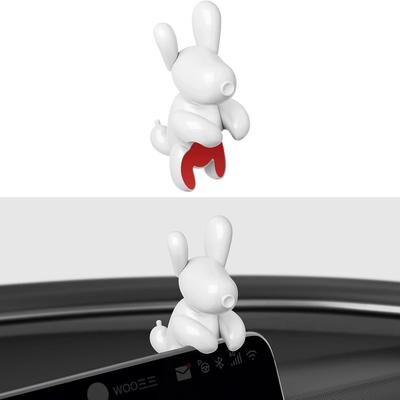
Uplift Essentials Tesla Dog Mode Professional Screen Interface Ornament Tesla Dog Mode Professional Screen Interface OrnamentEnhance your vehicles interior aesthetic with the Tesla Dog Mode Professional Screen Interface Ornament. Engineered as a highfidelity physical homage to a signature petsafety feature, this precisionmolded decoration seamlessly integrates with the...67,97 $*Shipping: 0,00 $Secure redirect to the provider



-
What are bits and bytes?
Bits and bytes are units of digital information used in computing. A bit is the smallest unit of data and can have a value of either 0 or 1. A byte is a group of 8 bits, and it is the standard unit for measuring data storage and transmission. Bytes are used to represent characters, numbers, and other types of data in computer systems. **
-
Why did we add 4 bytes?
We added 4 bytes because we needed to increase the memory allocation for the data structure in order to accommodate additional information or larger values. By adding 4 bytes, we are able to store more data and ensure that the structure can handle the necessary information without running into memory overflow issues. This extra space allows for flexibility and scalability in the data structure, making it more robust and capable of handling a wider range of data inputs. **
-
Receives bytes, but sends very few?
A device that receives bytes but sends very few could be a sensor. Sensors are designed to detect and collect data from their environment, such as temperature, pressure, or motion, and then transmit that data to a central processing unit or controller. However, sensors typically only send small amounts of data at specific intervals, as they are not designed for continuous or high-volume data transmission. This makes them efficient for monitoring and collecting data without overwhelming the network with unnecessary traffic. **
-
How do you convert bits to bytes?
To convert bits to bytes, you need to divide the number of bits by 8. Since there are 8 bits in a byte, dividing the total number of bits by 8 will give you the equivalent number of bytes. For example, if you have 64 bits, dividing by 8 would give you 8 bytes. This conversion is important when dealing with data storage and transmission, as bytes are commonly used to represent file sizes and data transfer rates. **


Why can't I add bytes in Java?
In Java, bytes are considered primitive data types and do not have built-in methods for addition like other numeric data types such as integers or doubles. To add bytes in Java, you would need to first convert them to a larger data type such as integers, perform the addition, and then convert the result back to a byte. This extra step is required because bytes are limited to a range of -128 to 127, and adding two bytes could potentially result in a value outside of this range. **
How many bytes does the given string occupy?
The given string "Hello, World!" occupies 13 bytes of memory. Each character in the string takes up 1 byte, except for the comma which also takes up 1 byte. Additionally, there is a null terminator at the end of the string which takes up 1 byte. Therefore, the total memory occupied by the string is 13 bytes. **
Top-Angebote
Products related to Bytes:
-
Mepra Katja Flatware Set - 24 Pieces"The Mepra ""Katja"" collection is designed by the talented architect and designer Katja Bremkamp. This collection features flatware with an asymmetrical and unique design, inspired by the natural movements of the hands while serving and eating."492,00 $*Shipping: 0,00 $Secure redirect to the provider
-
Baby Mode Cable Knit Baby BlanketBring your little one home for the first time in this cable-knit baby blanket. Soft cotton construction delivers a cozy layer of warmth, and the solid color brings a beautiful finishing touch to your child's nursery.28,12 $*Shipping: 0,00 $Secure redirect to the provider
-
How many bytes does the WLAN send if it receives 2,000,000 bytes but sends 64,000,000 bytes?
If the WLAN receives 2,000,000 bytes but sends 64,000,000 bytes, the total number of bytes sent and received would be 66,000,000 bytes. This is because the WLAN is both receiving and sending data. **
-
What are numbers and bytes?
Numbers are mathematical entities used to quantify and count objects or events. They can be integers, fractions, decimals, or irrational numbers. Bytes, on the other hand, are units of digital information that consist of 8 bits. They are used to represent characters, numbers, and other data in computer systems. Bytes are the basic building blocks of digital information storage and processing. **
-
What are bits and bytes?
Bits and bytes are units of digital information used in computing. A bit is the smallest unit of data and can have a value of either 0 or 1. A byte is a group of 8 bits, and it is the standard unit for measuring data storage and transmission. Bytes are used to represent characters, numbers, and other types of data in computer systems. **
-
Why did we add 4 bytes?
We added 4 bytes because we needed to increase the memory allocation for the data structure in order to accommodate additional information or larger values. By adding 4 bytes, we are able to store more data and ensure that the structure can handle the necessary information without running into memory overflow issues. This extra space allows for flexibility and scalability in the data structure, making it more robust and capable of handling a wider range of data inputs. **
Similar search terms for Bytes
-
Uplift Essentials Tesla Dog Mode Professional Screen Interface Ornament Tesla Dog Mode Professional Screen Interface OrnamentEnhance your vehicles interior aesthetic with the Tesla Dog Mode Professional Screen Interface Ornament. Engineered as a highfidelity physical homage to a signature petsafety feature, this precisionmolded decoration seamlessly integrates with the...67,97 $*Shipping: 0,00 $Secure redirect to the provider
-
Baby Mode Cable Knit Sherpa Baby Blanket, IvoryYou can wrap your little one up nicely in this spacious blanket, cool in color yet ultrasoft and warm in pure cotton knit fabric. Cable knit luxury on one side with soft sherpa on back. Blanket front is made from 100% soft spun knitted cotton.32,42 $*Shipping: 0,00 $Secure redirect to the provider
-
Mepra Katja Flatware Set - 24 Pieces"The Mepra ""Katja"" collection is designed by the talented architect and designer Katja Bremkamp. This collection features flatware with an asymmetrical and unique design, inspired by the natural movements of the hands while serving and eating."570,00 $*Shipping: 0,00 $Secure redirect to the provider
-
Receives bytes, but sends very few?
A device that receives bytes but sends very few could be a sensor. Sensors are designed to detect and collect data from their environment, such as temperature, pressure, or motion, and then transmit that data to a central processing unit or controller. However, sensors typically only send small amounts of data at specific intervals, as they are not designed for continuous or high-volume data transmission. This makes them efficient for monitoring and collecting data without overwhelming the network with unnecessary traffic. **
-
How do you convert bits to bytes?
To convert bits to bytes, you need to divide the number of bits by 8. Since there are 8 bits in a byte, dividing the total number of bits by 8 will give you the equivalent number of bytes. For example, if you have 64 bits, dividing by 8 would give you 8 bytes. This conversion is important when dealing with data storage and transmission, as bytes are commonly used to represent file sizes and data transfer rates. **
-
Why can't I add bytes in Java?
In Java, bytes are considered primitive data types and do not have built-in methods for addition like other numeric data types such as integers or doubles. To add bytes in Java, you would need to first convert them to a larger data type such as integers, perform the addition, and then convert the result back to a byte. This extra step is required because bytes are limited to a range of -128 to 127, and adding two bytes could potentially result in a value outside of this range. **
-
How many bytes does the given string occupy?
The given string "Hello, World!" occupies 13 bytes of memory. Each character in the string takes up 1 byte, except for the comma which also takes up 1 byte. Additionally, there is a null terminator at the end of the string which takes up 1 byte. Therefore, the total memory occupied by the string is 13 bytes. **
* All prices are inclusive of VAT and, if applicable, plus shipping costs. The offer information is based on the details provided by the respective shop and is updated through automated processes. Real-time updates do not occur, so deviations can occur in individual cases. ** Note: Parts of this content were created by AI.